
-
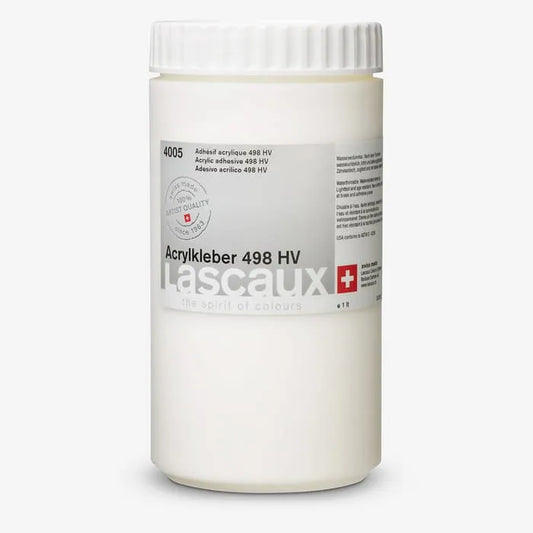
Lascaux 498 HV Acrylic Adhesive – White Glue for Lining and Marouflage
Some sizes on pre-orderRegular price From 9,90 €Regular priceUnit price perLascaux 498 HV Acrylic Adhesive – White Glue for Lining and Marouflage
Regular price From 9,90 €Regular priceUnit price perLascaux 498 HV Acrylic Adhesive – White Glue for Lining and Marouflage
Regular price From 9,90 €Regular priceUnit price per -
Divolo Rabbit Skin Glue
Some sizes on pre-orderRegular price From 7,40 €Regular priceUnit price perDivolo Rabbit Skin Glue
Regular price From 7,40 €Regular priceUnit price perDivolo Rabbit Skin Glue
Regular price From 7,40 €Regular priceUnit price per -
JunFunori® Glas — Consolidant for Art Conservation
Pre-order · arrives in 1-2 weeksRegular price 89,25 €Regular priceUnit price per -
Lascaux Medium for Consolidation — Acrylic Consolidant for Restoration
In stockRegular price From 46,99 €Regular priceUnit price perLascaux Medium for Consolidation — Acrylic Consolidant for Restoration
Regular price From 46,99 €Regular priceUnit price perLascaux Medium for Consolidation — Acrylic Consolidant for Restoration
Regular price From 46,99 €Regular priceUnit price per -
Lascaux 303 HV Acrylic Adhesive – Heat-Seal Lining and Relining
In stockRegular price 41,90 €Regular priceUnit price per -
Lascaux Acrylic Adhesive 498 20-X — Strip-lining and Marouflage of Textiles
Pre-order · arrives in 1-2 weeksRegular price From 47,12 €Regular priceUnit price perLascaux Acrylic Adhesive 498 20-X — Strip-lining and Marouflage of Textiles
Regular price From 47,12 €Regular priceUnit price perLascaux Acrylic Adhesive 498 20-X — Strip-lining and Marouflage of Textiles
Regular price From 47,12 €Regular priceUnit price per -
Lascaux 375 P Hot Melt Adhesive (liquid)
Pre-order · arrives in 1-2 weeksRegular price From 94,70 €Regular priceUnit price perLascaux 375 P Hot Melt Adhesive (liquid)
Regular price From 94,70 €Regular priceUnit price perLascaux 375 P Hot Melt Adhesive (liquid)
Regular price From 94,70 €Regular priceUnit price per -
Lascaux 375 Hot Melt Adhesive Film
Pre-order · arrives in 1-2 weeksRegular price 345,81 €Regular priceUnit price per -
Lascaux 375 Hot Melt Adhesive (Dry Mixture)
Pre-order · arrives in 1-2 weeksRegular price 216,60 €Regular priceUnit price per -
Lascaux Adhesive Wax 443-95 – Lining, mounting and facing
Pre-order · arrives in 1-2 weeksRegular price 57,24 €Regular priceUnit price per -
Polyamide Thermoadhesive Powder for Textiles | Lascaux 5350 (Ref. 4040)
Pre-order · arrives in 1-2 weeksRegular price From 13,21 €Regular priceUnit price perPolyamide Thermoadhesive Powder for Textiles | Lascaux 5350 (Ref. 4040)
Regular price From 13,21 €Regular priceUnit price perPolyamide Thermoadhesive Powder for Textiles | Lascaux 5350 (Ref. 4040)
Regular price From 13,21 €Regular priceUnit price per -
Bolex Dorado Divolo 300ml - Built-in Rabbit Skin Glue - Italian Yellow Ochre
In stockRegular price 13,05 €Regular priceUnit price per21,20 €Sale price 13,05 €Sale -
Paraloid B-72 — Conservation-grade acrylic resin (Kremer)
Pre-order · arrives in 1-2 weeksRegular price From 8,10 €Regular priceUnit price perParaloid B-72 — Conservation-grade acrylic resin (Kremer)
Regular price From 8,10 €Regular priceUnit price perParaloid B-72 — Conservation-grade acrylic resin (Kremer)
Regular price From 8,10 €Regular priceUnit price per -
Klucel™ G — Hydroxypropylcellulose for Conservation (Kremer)
Pre-order · arrives in 1-2 weeksRegular price From 21,92 €Regular priceUnit price perKlucel™ G — Hydroxypropylcellulose for Conservation (Kremer)
Regular price From 21,92 €Regular priceUnit price perKlucel™ G — Hydroxypropylcellulose for Conservation (Kremer)
Regular price From 21,92 €Regular priceUnit price per -
Aquazol® — Water-Soluble Resin for Conservation (Kremer)
Pre-order · arrives in 1-2 weeksRegular price From 17,13 €Regular priceUnit price perAquazol® — Water-Soluble Resin for Conservation (Kremer)
Regular price From 17,13 €Regular priceUnit price perAquazol® — Water-Soluble Resin for Conservation (Kremer)
Regular price From 17,13 €Regular priceUnit price per -
Cyclododecane — Volatile temporary consolidant (Kremer)
Pre-order · arrives in 1-2 weeksRegular price From 78,63 €Regular priceUnit price perCyclododecane — Volatile temporary consolidant (Kremer)
Regular price From 78,63 €Regular priceUnit price perCyclododecane — Volatile temporary consolidant (Kremer)
Regular price From 78,63 €Regular priceUnit price per -
Methocel™ A4M — Methylcellulose for Conservation (Kremer)
Pre-order · arrives in 1-2 weeksRegular price From 16,45 €Regular priceUnit price perMethocel™ A4M — Methylcellulose for Conservation (Kremer)
Regular price From 16,45 €Regular priceUnit price perMethocel™ A4M — Methylcellulose for Conservation (Kremer)
Regular price From 16,45 €Regular priceUnit price per -
Araldite 2020 (500 g kit)
Pre-order · arrives in 1-2 weeksRegular price 168,06 €Regular priceUnit price per -
BEVA 371 Akron (1 L)
Pre-order · arrives in 1-2 weeksRegular price 41,68 €Regular priceUnit price per -
Tylose MH 300 P2 – Cellulose Ether for Conservation and Restoration
Pre-order · arrives in 1-2 weeksRegular price 46,89 €Regular priceUnit price 93,78 € per 1000g -
EVA ART by CTS — EVA adhesive in aqueous dispersion for paper and fixative for paint layers
Pre-order · arrives in 1-2 weeksRegular price From 6,95 €Regular priceUnit price perEVA ART by CTS — EVA adhesive in aqueous dispersion for paper and fixative for paint layers
Regular price From 6,95 €Regular priceUnit price perEVA ART by CTS — EVA adhesive in aqueous dispersion for paper and fixative for paint layers
Regular price From 6,95 €Regular priceUnit price per -
Wheat starch (1 kg)
In stockRegular price 13,95 €Regular priceUnit price per -
Klucel® G (500 g)
In stockRegular price 118,94 €Regular priceUnit price per -
Sturgeon Glue (1 kg)
Pre-order · arrives in 1-2 weeksRegular price 129,95 €Regular priceUnit price per -
Paraloid B-72 (1 kg)
In stockRegular price 58,95 €Regular priceUnit price per



Consolidation and adhesion are two of the most delicate decisions in any intervention: what you apply today must be stable, compatible with the original and, above all, reversible. In this collection, we bring together the adhesives and consolidants of reference in conservation-restoration, the same ones used in workshops, museums, and institutions.
Each family addresses a different problem—fixing a powdery layer, joining a fragment, re-lining a canvas, stabilizing a paint layer, or gluing paper—and making the right choice begins with understanding what each one does.
Types of Adhesives and Consolidants
Paraloid B-72 and Acrylic Resins
Paraloid B-72 is the reference acrylic consolidant: stable, reversible, and water-free. It is prepared in solvent at the concentration required for the intervention, from a 2-3% fixative to a 15-30% adhesive. The family also includes aqueous acrylic dispersions such as Primal AC-33, Plextol, or Lascaux Medium for Consolidation. If you want to delve deeper, we explain it thoroughly in our technical guide on Paraloid B-72.
BEVA Adhesives
The BEVA range (in film and gel) is a classic for re-lining and consolidating textile and pictorial supports, valued for its heat reactivation and tack control.
Animal Glues
Animal glues (rabbit, sturgeon, fish, and gelatins) are traditional adhesives in restoration: essential for gilding, preparing layers, and works where compatibility with historical techniques is sought.
Cellulosic Adhesives
Cellulose ethers—hydroxypropyl cellulose (Klucel), methylcellulose, carboxymethyl cellulose, and ethyl cellulose—are consolidants and adhesives in an aqueous medium, widely used on paper, porous supports, and fixations where water is acceptable.
Starches and Natural Adhesives for Paper
Wheat starch (Aytex-P, Jin Shofu) and funori / JunFunori are the reversible natural adhesives par excellence in paper conservation, graphic works, and consolidation of matte paint layers.
Polyvinyl Alcohol (PVA) and Polyvinyl Acetates (PVAc)
Polyvinyl alcohol (PVA) is water-soluble and used in aqueous adhesions and consolidations. Polyvinyl acetates (PVAc)—"white glues" and resins like Mowilith or Jade—cover gluing and mounting depending on the support and the required reversibility.
Epoxy Resins and Special Consolidants
For transparent structural bonds in glass and ceramics, we have conservation epoxy resins (like Hxtal NYL-1). And for specific cases, special consolidants such as Aquazol (soluble in water and polar solvents) or cyclododecane, a volatile temporary fixative that sublimates at room temperature.
How to choose
The choice depends on three factors: the support (textile, paper, wood, stone, ceramic), whether the intervention allows water or not, and the degree of reversibility you need. If you have a specific intervention in mind and are unsure which product fits, write to us at info@innovart.art and we will give you a specific recommendation.
Frequently asked questions
What is the difference between Aquazol 50, 200 and 500?
Molecular weight, and with it viscosity. The 50 is around 50,000; the 200, 200,000; the 500, 500,000. In kinematic viscosity that is 5-7, 18-24 and 60-80 cSt respectively. The practical consequence is straightforward: at the same concentration, the higher the grade, the more body the solution has. Which grade suits a given treatment is the conservator’s call.
What does Aquazol dissolve in?
Freely in water. And above 25 % by weight also in acetone, ethanol, methanol, methyl ethyl ketone and methylene chloride. It is practically insoluble in toluene and n-pentane, below 2 %. In aqueous solution its pH is neutral (6.5-7.8 at 10 %).
Can it be removed after application?
Aquazol redissolves in water and in the polar solvents listed above. That is the physical basis for removing it. How far it can be recovered from a particular object depends on the object, not on the product.
Who makes Aquazol?
Polymer Chemistry Innovations, Inc., in Tucson, Arizona. It is poly(2-ethyl-2-oxazoline), CAS number 25805-17-8. Kremer Pigmente and CTS distribute it, but the manufacturer is PCI. Its safety data sheet does not classify it as a hazardous material and assigns no signal word.
What does the “A4M” in Methocel mean?
The code states the viscosity. The number is the value in mPa·s measured at 2 % in water at 20 °C, and in that nomenclature “C” stands for 100 and “M” for 1,000: hence A4M is around 4,000 mPa·s and A4C around 400. The manufacturer’s specification is 3,500 to 5,600 cP. Note that this 2 % is the test concentration, not a recommended working strength.
What happens to Methocel when it is heated?
It gels. Methylcellulose shows reversible thermal gelation: above roughly 55 °C the solution sets, and it flows again on cooling. This is not degradation, it is its normal behaviour.
What is filmoplast P made of?
A transparent special paper with a water-based acrylic adhesive: solvent-free, phthalate-free and acid-free, permanently elastic and slightly alkaline, with buffering capacity against acid deterioration. Also APEO- and BPA-free. It has passed the PAT to ISO 18916, and its ageing resistance has been tested by the Papiertechnische Stiftung. It is made by Neschen.