
-
Curved Precision Tweezers with LED Light - Paper and Parchment Preservation
Pre-order · arrives in 1-2 weeksRegular price From 3,99 €Regular priceUnit price perCurved Precision Tweezers with LED Light - Paper and Parchment Preservation
Regular price From 3,99 €Regular priceUnit price perCurved Precision Tweezers with LED Light - Paper and Parchment Preservation
Regular price From 3,99 €Regular priceUnit price per -
Plastic Bone Folder for Bookbinding and Paper | 2 Models
In stockRegular price From 2,45 €Regular priceUnit price per5,40 €Sale price From 2,45 €Plastic Bone Folder for Bookbinding and Paper | 2 Models
Regular price From 2,45 €Regular priceUnit price per5,40 €Sale price From 2,45 €Plastic Bone Folder for Bookbinding and Paper | 2 Models
Regular price From 2,45 €Regular priceUnit price per5,40 €Sale price From 2,45 €Sale -
Silicone Work Mat for Preservation and Restoration (50 × 70cm)
In stockRegular price 7,99 €Regular priceUnit price per -
Reemay® — Non-woven polyester fabric for conservation (50 m roll)
Some sizes on pre-orderRegular price From 69,00 €Regular priceUnit price perReemay® — Non-woven polyester fabric for conservation (50 m roll)
Regular price From 69,00 €Regular priceUnit price perReemay® — Non-woven polyester fabric for conservation (50 m roll)
Regular price From 69,00 €Regular priceUnit price per -
Straight Precision Tweezers with LED Light - Paper, Parchment and Graphic Documents
Some sizes on pre-orderRegular price From 3,99 €Regular priceUnit price perStraight Precision Tweezers with LED Light - Paper, Parchment and Graphic Documents
Regular price From 3,99 €Regular priceUnit price perStraight Precision Tweezers with LED Light - Paper, Parchment and Graphic Documents
Regular price From 3,99 €Regular priceUnit price per -
Lascaux Blotting Paper — sheet 61 × 86 cm, 315 gsm
In stockRegular price 16,86 €Regular priceUnit price per -
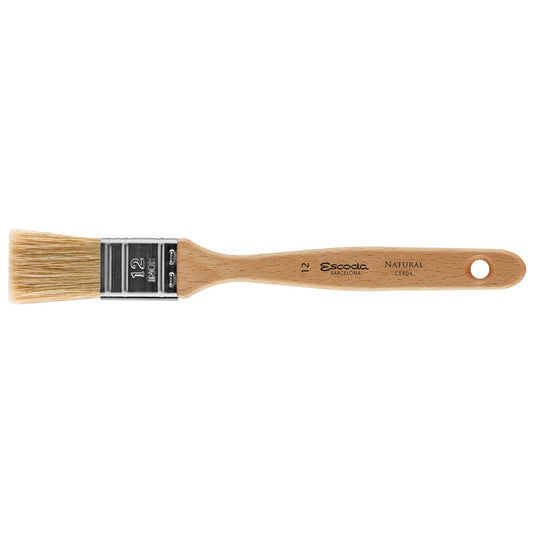
Escoda Natural 8146 Flat Brush — natural Chungking bristle, single, square-cut
Pre-order · arrives in 1-2 weeksRegular price From 9,48 €Regular priceUnit price perEscoda Natural 8146 Flat Brush — natural Chungking bristle, single, square-cut
Regular price From 9,48 €Regular priceUnit price perEscoda Natural 8146 Flat Brush — natural Chungking bristle, single, square-cut
Regular price From 9,48 €Regular priceUnit price per -
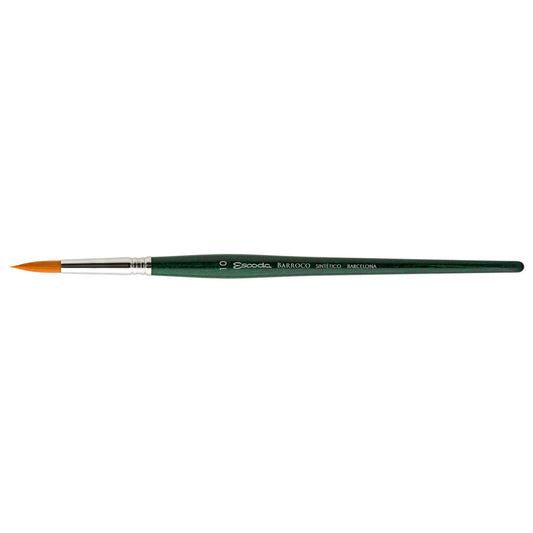
Escoda Barroco 1410 Brush — round, Toray Oro fiber, short handle
Pre-order · arrives in 1-2 weeksRegular price From 5,59 €Regular priceUnit price perEscoda Barroco 1410 Brush — round, Toray Oro fiber, short handle
Regular price From 5,59 €Regular priceUnit price perEscoda Barroco 1410 Brush — round, Toray Oro fiber, short handle
Regular price From 5,59 €Regular priceUnit price per -
FAIBO S1600 Scissors — stainless steel, 16 cm, bi-material handle
Pre-order · arrives in 1-2 weeksRegular price 1,65 €Regular priceUnit price per -
FAIBO 960-60 cutting ruler — aluminum, 60 cm, with stainless steel edge
Pre-order · arrives in 1-2 weeksRegular price 14,95 €Regular priceUnit price per -
Filmoplast P
Pre-order · arrives in 1-2 weeksRegular price 22,39 €Regular priceUnit price per -
Methocel™ A4M — Methylcellulose for Conservation (Kremer)
Pre-order · arrives in 1-2 weeksRegular price From 16,45 €Regular priceUnit price perMethocel™ A4M — Methylcellulose for Conservation (Kremer)
Regular price From 16,45 €Regular priceUnit price perMethocel™ A4M — Methylcellulose for Conservation (Kremer)
Regular price From 16,45 €Regular priceUnit price per -
Bone Folder for Bookbinding and Paper Restoration
In stockRegular price 6,95 €Regular priceUnit price per -
Lascaux Dahlia Sprayer – Chrome-Plated Brass with Hand Pump
Pre-order · arrives in 1-2 weeksRegular price From 126,14 €Regular priceUnit price perLascaux Dahlia Sprayer – Chrome-Plated Brass with Hand Pump
Regular price From 126,14 €Regular priceUnit price perLascaux Dahlia Sprayer – Chrome-Plated Brass with Hand Pump
Regular price From 126,14 €Regular priceUnit price per -
Tylose MH 300 P2 – Cellulose Ether for Conservation and Restoration
Pre-order · arrives in 1-2 weeksRegular price 46,89 €Regular priceUnit price 93,78 € per 1000g -
Hollytex Lascaux — Non-woven polyester fabric for paper and canvas artwork restoration
Pre-order · arrives in 1-2 weeksRegular price 175,00 €Regular priceUnit price per -
Pack of Flat Brass Clips (6 Units) – Conservation and Restoration
In stockRegular price From 11,99 €Regular priceUnit price perPack of Flat Brass Clips (6 Units) – Conservation and Restoration
Regular price From 11,99 €Regular priceUnit price perPack of Flat Brass Clips (6 Units) – Conservation and Restoration
Regular price From 11,99 €Regular priceUnit price per -
Lyon Veil (silk crepeline) 5 × 1.4 m
In stockRegular price 219,00 €Regular priceUnit price per -
Sympatex (5 x 1.47 m)
In stockRegular price 350,00 €Regular priceUnit price per -
Pearl Head Pins 4×38 mm – Box of 100
In stockRegular price 3,90 €Regular priceUnit price perPearl Head Pins 4×38 mm – Box of 100
Regular price 3,90 €Regular priceUnit price perPearl Head Pins 4×38 mm – Box of 100
Regular price 3,90 €Regular priceUnit price per -
Tengujo Japanese Paper 6g · 48×94 cm · pack of 40 sheets
Pre-order · arrives in 1-2 weeksRegular price 84,00 €Regular priceUnit price per -
Tengujo Kashmir Japanese Paper 9g · Pack of 40 sheets
Pre-order · arrives in 1-2 weeksRegular price 83,60 €Regular priceUnit price per -
EVA ART by CTS — EVA adhesive in aqueous dispersion for paper and fixative for paint layers
Pre-order · arrives in 1-2 weeksRegular price From 6,95 €Regular priceUnit price perEVA ART by CTS — EVA adhesive in aqueous dispersion for paper and fixative for paint layers
Regular price From 6,95 €Regular priceUnit price perEVA ART by CTS — EVA adhesive in aqueous dispersion for paper and fixative for paint layers
Regular price From 6,95 €Regular priceUnit price per -
Wheat starch (1 kg)
In stockRegular price 13,95 €Regular priceUnit price per -
Klucel® G (500 g)
In stockRegular price 118,94 €Regular priceUnit price per -
Tengujo Japanese Paper 18 g · 46×69 cm · pack of 25 sheets
Pre-order · arrives in 1-2 weeksRegular price 78,75 €Regular priceUnit price per -
Japanese Paper Bib Tengujo · 48×75 cm · pack of 65 sheets
Pre-order · arrives in 1-2 weeksRegular price 84,50 €Regular priceUnit price per





Paper Restoration
Materials for restoring paper and graphic documents. Tengujo Japanese paper from CTS in four weights, from 6 to 18 g, for reinforcements, mends, and linings; wheat starch for preparing paste, and Klucel G, an adhesive for paper and cardboard. For drying and humidification, Lascaux blotting paper, highly absorbent and with very good wet strength, and Sympatex membrane, waterproof to liquid water and breathable to vapor. And precision tweezers with LED light, in straight and curved versions, for placing small mends and reinforcement strips.
Frequently asked questions about paper restoration
Which adhesive to use for paper restoration: wheat starch paste, methylcellulose, Tylose, or Klucel G?
Hollytex or Reemay: which non-woven polyester to use for paper?
What are blotting paper and Sympatex used for in paper restoration?
What tools are used to handle fragile paper and small pieces during restoration?
Does Klucel G dissolve in water or in alcohol?
In both, with one caveat worth knowing: above 45 °C it stops being soluble in water. It also dissolves in many polar solvents, and does not in most non-polar ones. In a 2 % solution its pH is between 5.0 and 8.5.
Cold water, ethyl alcohol, methanol, 95 % isopropanol and propylene glycol give a clear solution; with acetone or pure isopropanol it comes out hazy, and it does not dissolve in white spirit, toluene or xylene. And if a water-based solution has warmed up and turned cloudy, it is not lost: cooled below 40 °C with stirring, it redissolves and recovers its viscosity.
How do you prepare Klucel G so it doesn't form lumps?
By first wetting the powder in about six times its weight of water at 50-60 °C, no hotter than 60: at that temperature it gets wet but does not dissolve. Then top up with cold water and stir, without vigorous beating, until no gels remain.
What kind of film does Klucel G leave when it dries?
A flexible film with no plasticiser, which does not turn tacky even at high humidity. And it remains soluble in cold water and polar solvents; it only stops being so if it is crosslinked with another resin.
Is Klucel G hazardous?
Its safety data sheet does not classify it as hazardous under Regulation (EC) 1272/2008, and it carries no hazard label. It is worth knowing that it is a combustible dust: its lower explosive limit is 30 g/m³ and it self-ignites at 420 °C. And that it should not be mixed with oxidisers or with strongly alkaline or acidic materials.
Which weight of Tengujo Japanese paper to choose: 6, 9, 12, or 18 g?
| Item | Weight | pH | Composition | Size |
|---|---|---|---|---|
| 561 Tengujo | 6 g/m² | 6,7 | 100 % manila | 480 × 940 mm |
| 502 Tengujo Kashmir | 9 g/m² | 6,7 | 100 % manila | 480 × 940 mm |
| 240 BIB Tengujo | 12 g/m² | 7,1 | 100 % manila | 480 × 750 mm |
| 508 Tengujo | 18 g/m² | 6,7 | 100 % manila | 460 × 690 mm |
Which weight suits a given treatment is the conservator’s call.