Japanese Paper Tengujo Kashmir 9g · 48×94 cm
Japanese Paper Tengujo Kashmir 9g · 48×94 cm
Share
Couldn't load pickup availability
Tengujo Kashmir 9g Japanese Paper — The workshop's daily workhorse
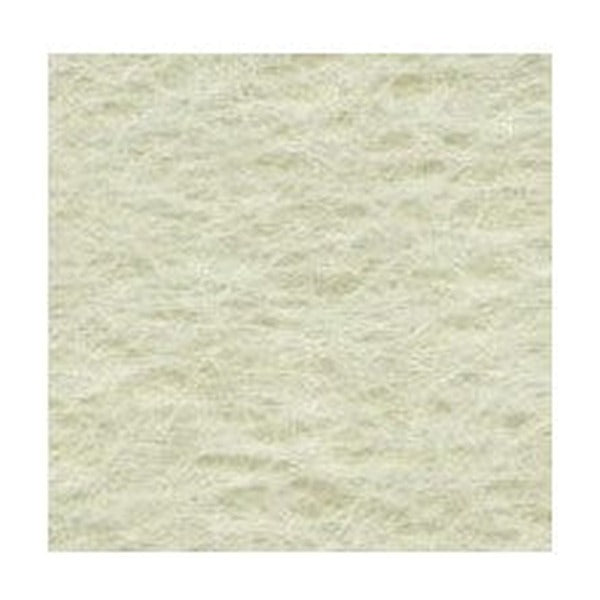
Tengujo Kashmir 9g is a 9 gsm machine-made Japanese paper made from 100% abaca (Manila hemp, Musa textilis), with a declared pH of 6.7. At this weight, the paper is virtually invisible once adhered: it reinforces without being noticeable on the artwork.
Why choose Tengujo Kashmir 9g?
- 100% abaca — Manila hemp fiber, chemically pulped: more consistent and significantly more economical than kozo, for workshop use where structural strength is not required.
- Invisible on the artwork — at 9 gsm, it reinforces without altering the original's appearance.
- No alkaline reserve — it does not add a buffer to the artwork, making it suitable for photography, cyanotypes, and alkali-sensitive substrates.
- Reversible — it can be removed by re-humidifying, depending on the adhesive used.
- Generous sheet size — 480 × 940 mm, usable in strips with minimal waste.
- Machine-made — consistent weight and texture from sheet to sheet, unlike handmade washi.
Uses and applications
- Repair of fine tears — in documents and graphic works on paper.
- Sealing small losses — localized reinforcement without adding rigidity.
- Reinforcement of archive documents — the standard weight for paper workshops.
- Art education — paper conservation practices in Fine Arts faculties and Conservation-Restoration schools.
Technical specifications
- Weight — 9 gsm
- Composition — 100% abaca (Manila hemp, Musa textilis)
- pH — 6.7 (declared by the manufacturer)
- Manufacture — machine-made
- Format — sheet 480 × 940 mm
- Storage — flat, in a dry place without direct light
When to choose abaca and when kozo?
Abaca and kozo are not the same fiber, although both are sold under the name "Japanese paper." Abaca comes from the leaf (Musa textilis) and its fiber measures 3-6 mm; kozo comes from the inner bark of the paper mulberry (Broussonetia papyrifera) and reaches 6-20 mm. This longer fiber makes kozo significantly more tear-resistant at the same weight.
For fine reinforcement, tear repair, and workshop use, abaca performs well and costs a fraction. For structural repair where the piece will continue to be handled—such as a book page in use, inlays, or spine reinforcement—kozo is the appropriate fiber.
Frequently Asked Questions
Is it the same as a kozo Japanese paper?
What adhesive is used to apply it?
Can it be used for lining a whole canvas?
Is it used in its natural color?
Why do you indicate that it has no alkaline reserve?
Do you have questions about which one to choose? Write to us. Available at innovart.art · info@innovart.art