
-
Turpentine Essence MIR 125 ml - Ref. 0307002 - Diluent for Oil Painting and Restoration
Pre-order · arrives in 1-2 weeksRegular price 6,05 €Regular priceUnit price per8,08 €Sale price 6,05 €Sale -
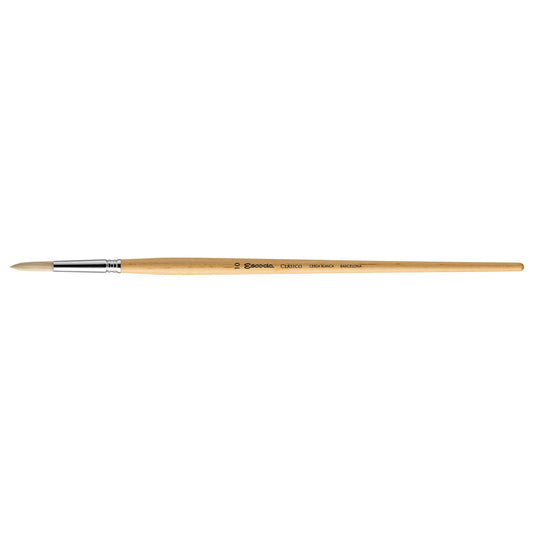
Escoda Clásico 5131 Brush — round, white Chungking bristle, long handle
Pre-order · arrives in 1-2 weeksRegular price 8,10 €Regular priceUnit price per -
Laponite® RD - Thickener for cleaning gels (Kremer)
Pre-order · arrives in 1-2 weeksRegular price From 8,89 €Regular priceUnit price perLaponite® RD - Thickener for cleaning gels (Kremer)
Regular price From 8,89 €Regular priceUnit price perLaponite® RD - Thickener for cleaning gels (Kremer)
Regular price From 8,89 €Regular priceUnit price per -
Agar-Agar — Gelling agent for conservation cleaning (Kremer)
Pre-order · arrives in 1-2 weeksRegular price From 22,45 €Regular priceUnit price perAgar-Agar — Gelling agent for conservation cleaning (Kremer)
Regular price From 22,45 €Regular priceUnit price perAgar-Agar — Gelling agent for conservation cleaning (Kremer)
Regular price From 22,45 €Regular priceUnit price per -
MIR Odorless Petroleum Essence — Odorless Diluent for Oil Painting and Restoration
Pre-order · arrives in 1-2 weeksRegular price From 8,08 €Regular priceUnit price perMIR Odorless Petroleum Essence — Odorless Diluent for Oil Painting and Restoration
Regular price From 8,08 €Regular priceUnit price perMIR Odorless Petroleum Essence — Odorless Diluent for Oil Painting and Restoration
Regular price From 8,08 €Regular priceUnit price per -
Candida Rugosa Lipase Type VII 5g - ≥700 U/mg
Pre-order · arrives in 1-2 weeksRegular price 96,24 €Regular priceUnit price per -
Citric acid 99.5% (1 kg)
In stockRegular price 12,45 €Regular priceUnit price per




Everything a professional needs to conserve and restore cultural assets, in one catalog. Here we gather the restoration articles that accompany the complete process of an intervention: preliminary examination, consolidation, cleaning, filling, chromatic reintegration, protective varnishing, and packaging.
These are conservation-restoration materials from leading brands, selected with technical criteria for freelance restorers, workshops, museums, and institutions. Not a warehouse of a thousand references: a selection of products that meet industry criteria —stability, reversibility, and compatibility with the original.
What the conservation and restoration catalog includes
- Adhesives and consolidants — Paraloid B-72, BEVA, animal glues, cellulose, and funori.
- Fillers and putties — for filling gaps in paintings and sculptures.
- Restoration varnishes — reversible, in different finishes.
- Pigments and retouching colors — for chromatic reintegration.
- Solvents and cleaning products.
- Papers, fabrics, and specialized tools.
Looking for a specific restoration item and can't find it? Write to us at info@innovart.art: if it's not in the catalog, we'll find it for you.