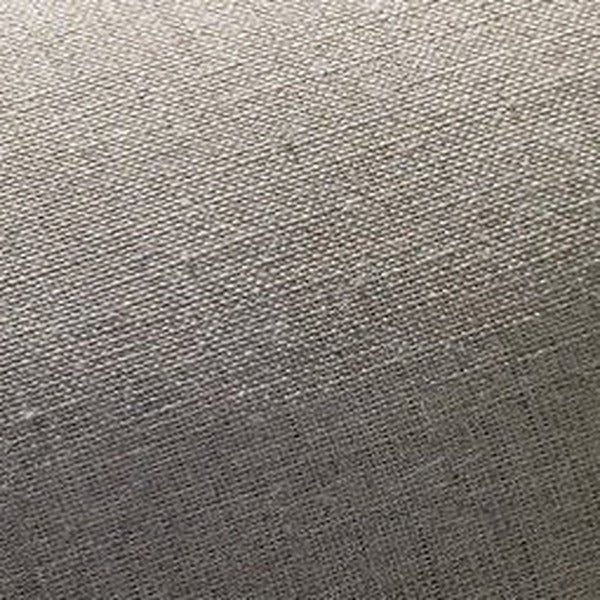
Lascaux Portrait linen 990 — Belgian linen 175 g/m² for restoration
Lascaux Portrait linen 990 — Belgian linen 175 g/m² for restoration
Share
Couldn't load pickup availability
Lascaux Portrait linen 990 (art. 4504) — the lightest of Lascaux's linens
A 100% pure Belgian linen fabric, long-fiber yarn, untreated and uncalendered, with a loomstate finish (raw, as it comes off the loom). It weighs 175 g/m², is 226 cm wide and has a warp of approx. 24.5 threads/cm and a weft of approx. 25 threads/cm. It is the lightest of Lascaux's linens: the other four linens on the same technical data sheet weigh 298, 305, 345 and 380 g/m². All these figures come from the manufacturer's technical data sheet (TDS, Technical Data Sheet) rev. 58378.02-02.26, from February 2026.
What is it used for?
Lascaux does not assign any use to this item. Its data sheet gives composition, density, weight, width, finish and sales format, and stops there. What follows are practices documented in Conservation-Restoration (C&R) with auxiliary linen and readings of the data on its data sheet, not manufacturer's instructions:
- Perimeter bands (strip-lining) — textile reinforcement adhered only to the edge of the original canvas, when the aim is to restore tension to the perimeter without intervening on the whole reverse.
- Localized patches and reinforcements on the reverse, for specific tears or losses.
- Support chosen for texture similarity, when the original canvas has a fine weave. This is a reading of the TDS numbers (175 g/m², approx. 25 threads/cm), not a statement from Lascaux.
Why choose the Portrait linen 990?
- It is the lightest of Lascaux's linens: 175 g/m². The other four linens on the same data sheet weigh 298, 305, 345 and 380 g/m².
- Warp and weft almost identical: approx. 24.5 versus approx. 25 threads/cm. The lining literature notes that the response of warp and weft to environmental conditions should be similar (Seymour, Strombek and van Och, «Demystifying Mist-Lining», chap. 9 of Conserving Canvas, Getty Publications, 2023). Here the two densities nearly match.
- 100% pure Belgian linen with long-fiber yarn, declared as such by the manufacturer.
- Identified and traceable manufacturer: Lascaux Colours & Restauro, Barbara Diethelm AG (Brüttisellen, Switzerland), with a public data sheet, revised in February 2026 and its own article number (4504).
Presentation and storage
- Presentation: by linear metre, folded. Not supplied on a roll.
- Width: 226 cm · Weight: 175 g/m² · Manufacturer reference: art. 4504.
- Lascaux does not publish storage conditions or shelf life for its fabrics.
Manufacturer: Lascaux Colours & Restauro, Barbara Diethelm AG — Zürichstrasse 42, CH-8306 Brüttisellen (Switzerland).
The limits, stated
- It is not the linen Lascaux presents for lining. In the English edition of its data sheet, the manufacturer calls art. 4452 (305 g/m²), 4501 (345 g/m²) and 4502 (380 g/m²) «Linen for lining and painting»; the Portrait linen 990 does not carry that name, and at 175 g/m² it is the lightest of the five linens on that same sheet. It does fit when what you need is perimeter reinforcement, a localized patch, or texture similarity with a fine-weave original — and that last point is a reading of the TDS numbers, not a statement from Lascaux.
- Tight weave (approx. 25 threads/cm): this figure works against it in mist-lining —a lining technique in which a minimal amount of acrylic dispersion is sprayed onto an auxiliary fabric before adhering it to the reverse of the original, often without tension—, because the literature favours open-weave fabrics: they need less tension to de-crimp and, above all, solvent vapour diffuses through them better, so less solvent is needed for activation (Seymour, Strombek and van Och, «Demystifying Mist-Lining», chap. 9 of Conserving Canvas, Getty Publications, 2023). The same tight weave works in its favour when the criterion is reproducing the texture of a fine original canvas: again, this is a reading of the numbers; the manufacturer does not state it.
- Linen is hygroscopic and tends to shrink above 75-80% relative humidity (RH) (Hackney, Paintings on Canvas: Lining and Alternatives, Tate Papers no. 2, 2004). Any structural use is conditioned on environmental control in the room or workshop.
- Lascaux does not publish shrinkage data or ageing tests for any of its fabrics. And the properties of a canvas vary between manufacturing batches (Young, Canvas Complexity, in Conserving Canvas, Getty, 2023). The solution is to test each batch on a sample before using it, which is what that same source recommends.
- The reversibility of the intervention is determined by the adhesive, not the linen. This fabric neither adds nor detracts from reversibility on its own: the decision lies in the adhesive system you choose.
- The manufacturer itself says so: supplying the material does not exempt you from checking beforehand its suitability for the support and the specific conditions of use of each intervention. The sample test remains yours to do.
- Lascaux does not publish a safety data sheet (SDS) for its fabrics; its catalogue of safety data sheets covers adhesives, resins and solvents.
Frequently asked questions
How many threads per centimetre does it have, and which is warp and which is weft?
Is it Lascaux's linen for full lining?
Which do I choose between this one and the Lascaux Lino Puro L-40?
Is it treated, sized or primed?
Is it sold on a roll or by the metre?
How much does it shrink and how does it behave with humidity?
What adhesive do I use with this linen?
Does it have a safety data sheet (SDS)?
Have questions? Write to us on WhatsApp, visit innovart.art or email us at info@innovart.art and we will advise you.