Skip to product information

1
/
of
1
Tengucho Japanese Paper 3 g/m² Natural for Conservation (Awagami) · 50 × 43 cm
Tengucho Japanese Paper 3 g/m² Natural for Conservation (Awagami) · 50 × 43 cm
Regular price
4,70 €
Regular price
7,79 €
Sale price
4,70 €
Washi Week
Unit price
/
per
Taxes included.
Shipping calculated at checkout.
Share
Questions about this product? Ask us on WhatsApp
In stock: usually arrives in 1 to 5 working days (mainland Spain and Balearics)
Secure payment by card, Apple Pay or Google Pay · 14-day returns
Tengucho Japanese Paper 3 g/m² Natural for Conservation (Awagami) · 50 × 43 cm
Couldn't load pickup availability
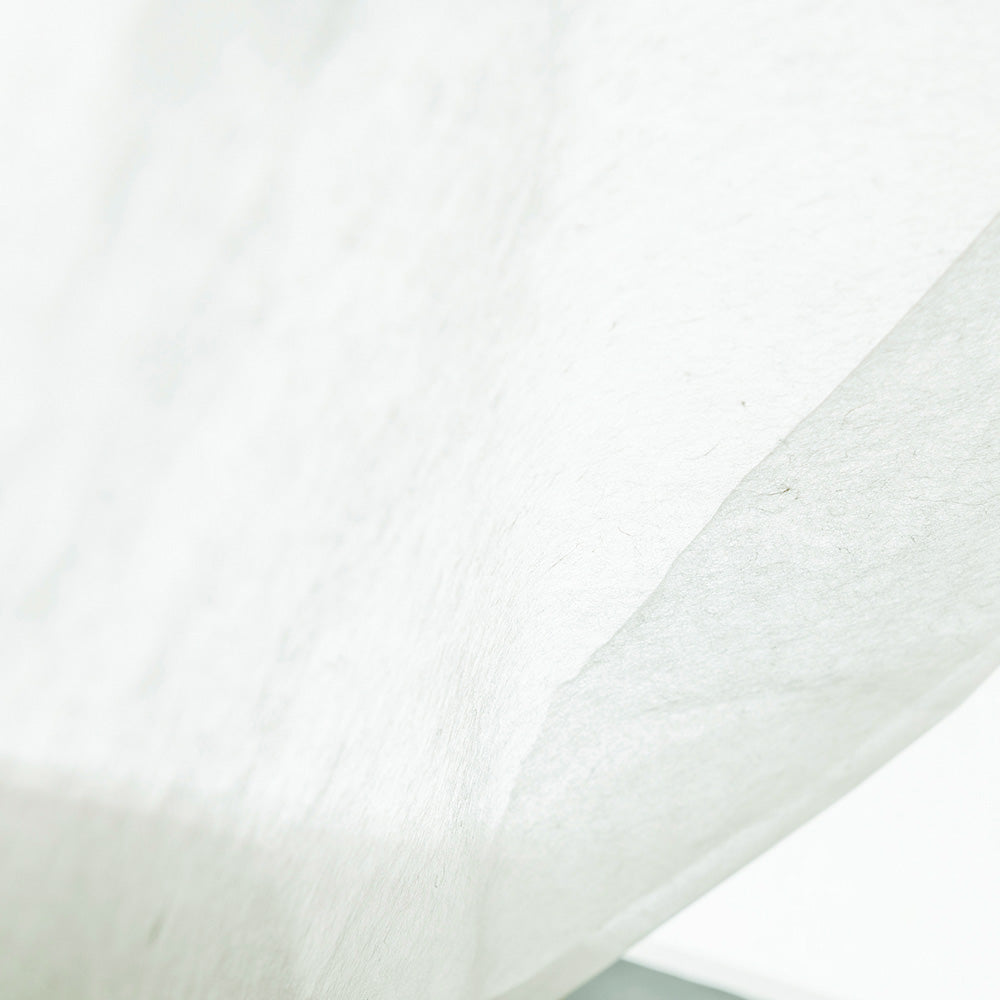
Awagami natural Tengucho Japanese paper: 3 g/m² kozo for repairing thin paper
A sheet of Awagami natural Tengucho Japanese paper, 3 g/m² and 50 × 43 cm, made according to the manufacturer from 100 % kozo (paper mulberry) fibre, unbleached. Awagami presents it as a restoration material. It is a very light tissue, meant for discreet repairs on thin paper, where the reinforcement should be the same weight as the original or lighter.
What is it used for?
- Closing clean tears in thin book, document or print sheets.
- Patching very small holes in thin paper.
- Making discreet reinforcements where the Japanese paper should be as unobtrusive as possible.
Why choose natural Tengucho 3 g/m²?
- 100 % kozo, according to Awagami.
- Declared process. The manufacturer states the fibre is cooked with caustic soda and steam-dried on a stainless-steel dryer.
- Natural, unbleached, and neutral paper, according to the manufacturer.
- A weight for fine repairs. The conservation literature documents 3.5 g/m² kozo tissue for repairing tears with wheat starch paste (British Library, 2024); this sheet is 3 g/m².
- 50 × 43 cm sheet: a single sheet yields many patches.
Presentation and storage
- Sold per sheet of 50 × 43 cm, 3 g/m², natural. The price is per sheet.
- Store it flat and dry.
How to work with it
- It is a very light sheet: handle it with care and dry hands. To practise the gesture, you can start with the natural Tengucho 5 g.
- With thin papers that cockle when wet, work with a barely damp adhesive and test first on a sacrificial sheet.
- A Japanese-paper reinforcement can be removed when it was applied with a reversible adhesive: reversibility comes from the adhesive, not the paper.
- Cut it to fit each repair.
Frequently asked questions
What fibre is it made from?
100 % kozo (paper mulberry), according to the Awagami data.
What exactly am I buying?
One sheet of natural Tengucho paper, 3 g/m², 50 × 43 cm. The price is per sheet.
Is it delicate to handle?
It is a very light tissue and should be handled with care and dry hands. If this is your first time with such a thin Japanese paper, test first on a sacrificial sheet.
Is it a neutral paper? Is it bleached?
Awagami describes it as neutral paper, and this natural version is not bleached.
Which adhesive should I use?
A reversible water-based adhesive. Wheat starch paste is documented in the paper conservation literature, and we stock the purified wheat starch powder from Kremer. If you are not sure which suits your case, message us on WhatsApp and we will work it out with you.
Any questions? Message us on WhatsApp, visit innovart.art or email info@innovart.art and we will advise you.