Skip to product information


1
/
of
12
MIR Teijin Synthetic Round Brush Ref. 400 - Oil and Acrylic (Sizes 00-24)
MIR Teijin Synthetic Round Brush Ref. 400 - Oil and Acrylic (Sizes 00-24)
Regular price
4,38 €
Regular price
Sale price
4,38 €
Unit price
/
per
Taxes included.
Shipping calculated at checkout.
Share
Couldn't load pickup availability
MIR Teijin Round Brush Ref. 400 — fine tip that recovers its shape stroke after stroke
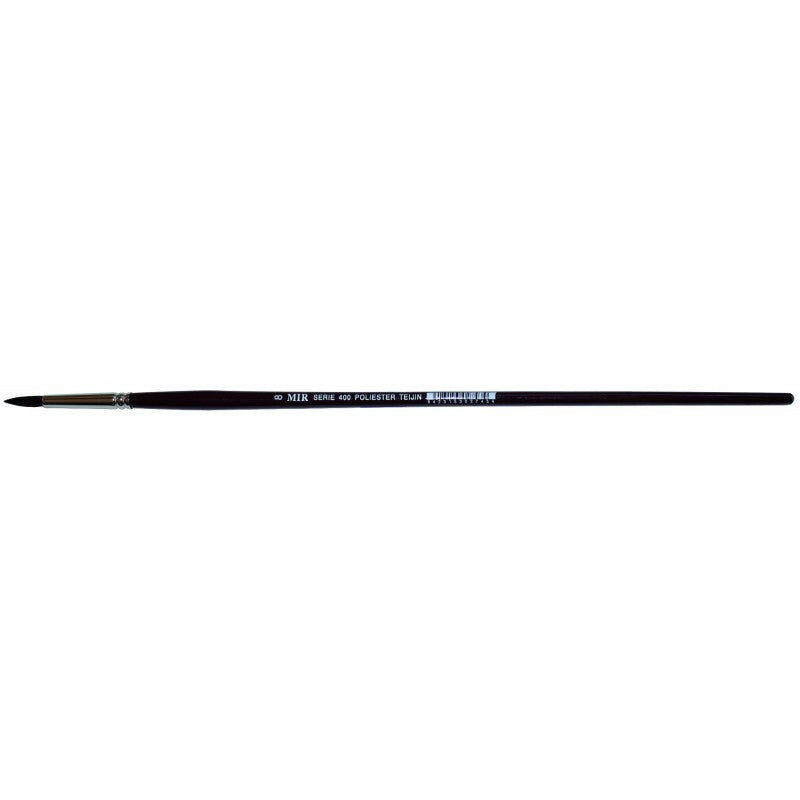
Round brush with Teijin synthetic fiber, manufactured in Japan, with a cupronickel ferrule and a long varnished wood handle. Teijin fiber is a cone-drawn filament that mimics the behavior of natural hair, retaining its shape better after each stroke. It differs from the MIR natural hair range (Marta Roja Ref. 300, white bristle Ref. 110) in that it is synthetic: more stable against the high pH of acrylic paint.
What is it used for?
- Oil and acrylic painting, the two uses declared by manufacturer MIR.
- Tempera and gouache: widespread use in specialized brush-making literature due to the good shape retention of Teijin fiber, not a claim made by MIR itself.
- Detail work and precision retouching: the fine round tip and the fiber's shape recovery make it suitable for lines and contours where control is needed.
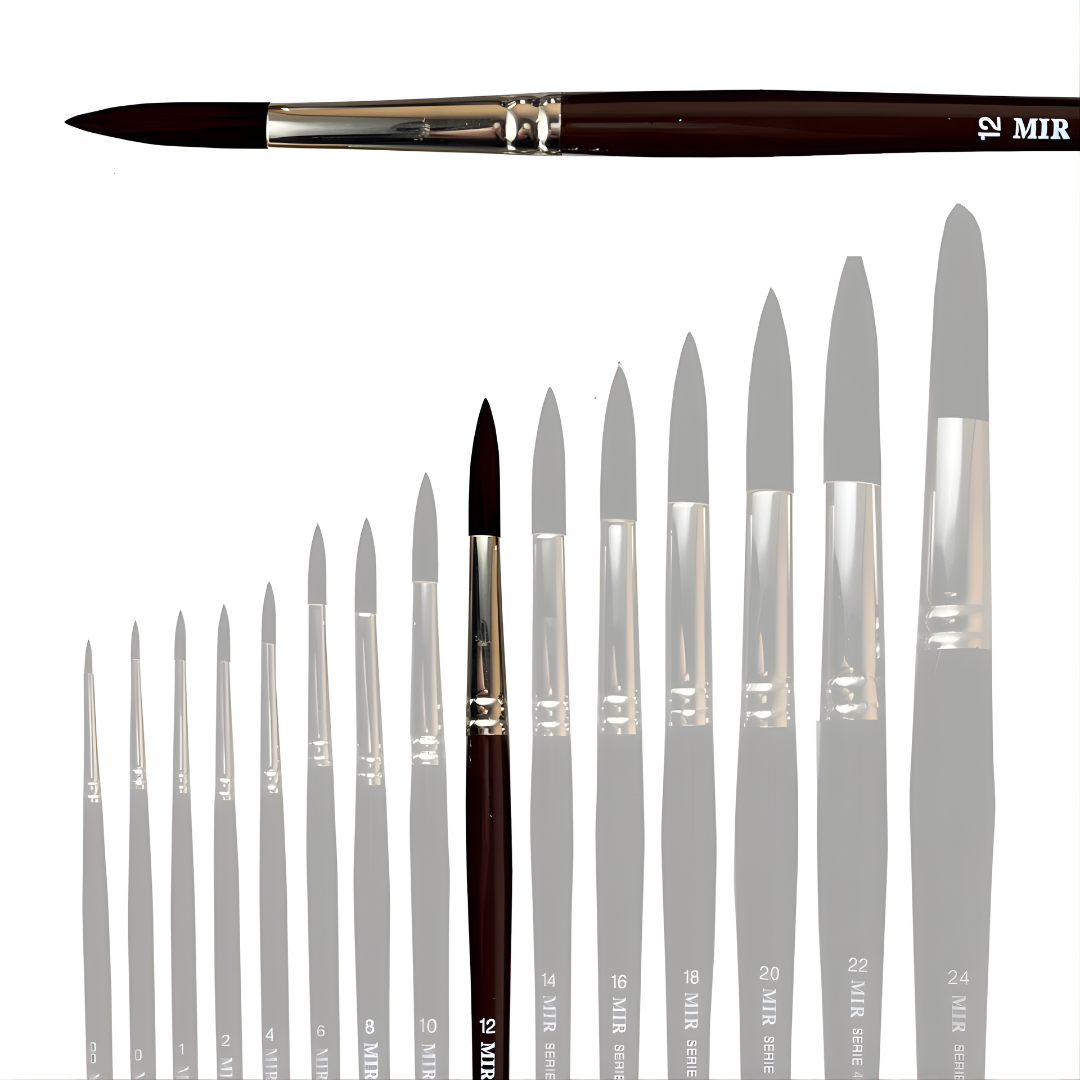
- Available in 15 sizes (No. 00 to No. 24), from the finest tip to the highest load, to adapt the stroke to the format of the piece.
Why choose the MIR Teijin Brush Ref. 400?
- Teijin synthetic fiber: one of the two historic Japanese manufacturers of cone-drawn filament for brush-making, along with Toray.
- Shape retention after use, a consistent quality across all the brush-making literature consulted — offered as a reasoned technical criterion, not as a test figure.
- Stability against the high pH of acrylic paint: the industry moved from natural hair to synthetic fiber partly because the pH of acrylic paint degrades natural hair with repeated use.
- Cupronickel ferrule, corrosion-resistant, across the entire MIR fine brush range.
- 15 sizes within the same reference: lets you match the brush to the detail of each area without changing lines.
Packaging and storage
- Packaging: single unit, long handle, with a plastic protector for hair and ferrule included from the factory. Available sizes: No. 00, 0, 1, 2, 4, 6, 8, 10, 12, 14, 16, 18, 20, 22 and 24.
- Keep the plastic protector on when not in use; clean the fiber after each work session.
- Service life: the manufacturer does not publish a figure. It depends on use and cleaning after each session.
MIR is a Catalan brand of brushes and paint founded in 1933 in L'Hospitalet de Llobregat.
When another brush suits better
- For very heavily pigmented, thick glazes the MIR white bristle line Ref. 110 is preferable: it gives the stiffness and the load that dense paste calls for. The Teijin Ref. 400 performs better in thin layers and controlled strokes.
- When fine watercolor calls for maximum load capacity and a very soft release, natural hair leads: there the Marta Roja MIR Ref. 300 series is preferable, the line the manufacturer itself intends for watercolor and retouching.
Frequently asked questions
What media can I use this brush with?
Oil and acrylic, according to manufacturer MIR. Brush-making literature also documents its use with tempera and gouache, although MIR does not declare this use for this specific model.
Why Teijin fiber and not natural hair?
Teijin fiber is a cone-drawn synthetic filament that retains its shape better than natural hair after each stroke. In addition, the high pH of acrylic paint degrades natural hair with repeated use, one of the reasons brush-making shifted toward synthetic fibers like this one.
What is the difference with the MIR Teijin Flat Brush Ref. 401?
Same Teijin fiber, same cupronickel ferrule and same long handle. Only the tip shape changes: round in the Ref. 400, flat in the Ref. 401. The round is better for lines and contours; the flat, for covering surface area and straight-edge strokes.
Is it suitable for precision retouching?
The fine round tip and the fiber's good shape recovery make it suitable for detail work. This is a technical criterion based on the shape and behavior of the fiber, not a specific recommendation from any Conservation-Restoration (C&R) institution for this model.
Which size should I choose for small detail work?
Low numbers (00 to 4) give finer tips, designed for detail. High numbers (14 to 24) carry more fiber load, for larger surfaces.
Is it suitable for heavily loaded glazes or fine watercolor?
It is not the ideal choice in either of these two cases. For heavily pigmented, thick glazes, the MIR white bristle line Ref. 110 is designed for that. For maximum load capacity and softness in fine watercolor, the natural-hair Marta Roja MIR Ref. 300 series is the manufacturer's own choice.
Is it resistant to strong solvents such as acetone or turpentine?
There is no data published by the manufacturer or by verifiable literature on this fiber's resistance to aggressive solvents, so nothing is claimed about it.
How is the brush cleaned and cared for?
The manufacturer does not publish a specific cleaning protocol for this brush. It is recommended to clean the fiber after each session and keep the plastic protector on when not in use. Innovart sells a brush-cleaning shampoo from the same MIR brand as a maintenance accessory.
Have questions? Write to us on WhatsApp, visit innovart.art, or email us at info@innovart.art and we will advise you.